
VC “Mose” Hollingsworth Sr. was barely 30 years old when he planted a small grove of Valencia oranges, collected a few cows and started a farm in Pine Level, west of Arcadia. Mose loved the orange groves and the land stretching along Horse Creek and the other tributaries of the Peace River. During the Great Depression, he added as much property to the family’s holdings as he could.
Today, the operation known as VCH Ranch – Citrus and Cattle stretches across 21.5 miles of creek frontage along Horse Creek, Brandy Branch and Buzzard Roost Branch in DeSoto and Hardee counties. Thanks to the Hollingsworth family’s commitment to conservation, nearly 8,000 acres of the family’s working agricultural lands and natural areas will remain protected for generations to come.
On November 17, the Florida Cabinet approved three conservation easements totaling approximately 7,057 acres through the Florida Department of Agriculture and Consumer Services’ (FDACS) Rural and Family Lands Protection Program (RFLPP), including two completed in partnership with the USDA Natural Resources Conservation Service (NRCS). A fourth easement, covering an additional 724 acres, was approved separately. Together, the four easements permanently protect approximately 7,782 acres of the VC Hollingsworth Horse Creek–Pine Level Ranch, preserving working cattle and citrus lands, natural habitats and important waterways in the Peace River Valley.
 Photo Credit: Lauren Yoho/Wildpath
VC Hollingsworth III and his sisters, Lou Hoopingarner and Beth Thornton, all grandchildren of Mose Hollingsworth, now run the family’s cattle and citrus operation.
Representing the fourth generation of ranching and citrus growing, VC is also a leader in Florida’s citrus industry. He serves on the boards of Florida Citrus Mutual and Florida’s Natural and represents District 2 as a grower member of the Florida Citrus Commission. Both his father and grandfather, Mose, were born in a house in the orange groves.
Together, VC, Beth and Lou made the decision to permanently protect their family’s land, ensuring that future generations can continue the agricultural traditions established by their ancestors.
“My granddad would be as happy as a lark to know the family has preserved our land forever,” Hollingsworth said.
VC, Beth and Lou are delighted to be part of the Rural and Family Lands Protection Program, which will help ensure their family’s land remains in agriculture for generations to come. Their shared commitment also provides lasting benefits far beyond the ranch, protecting connected wildlife habitat, natural waterways and open space throughout the Peace River Valley.
The conservation easements protect more than 21 miles of natural creek frontage along three major tributaries of the Peace River, an important drinking water source for approximately one million residents of Southwest Florida. By preserving native habitat, wetlands and floodplains along these waterways, the easements help maintain natural systems that filter drinking water, store floodwaters and sustain the freshwater flows through the Peace River watershed to Charlotte Harbor.
The protection of such a large, connected landscape also provides significant benefits for wildlife. Florida panthers, Florida black bears, burrowing owls, crested caracara, fox squirrels, gopher tortoises and numerous other native wildlife depend on the region’s working ranchlands and natural habitats. Keeping these lands intact helps maintain important wildlife corridors while allowing cattle ranching and citrus production to continue.
Beyond protecting water resources and wildlife habitat, the easements help secure the future of a family agricultural operation that has weathered generations of economic and environmental challenges.
Florida’s citrus industry has faced tremendous hardships over the years. The freezes of the 1980s, diseases such as citrus canker and greening, and multiple major storms including Hurricanes Charley, Irma and Ian have all affected the family’s ability to produce citrus. Today, the Hollingsworths continue growing Hamlin and Valencia oranges, although production is far below what it was in previous decades.
Hollingsworth remembers the hard work required to keep the groves productive when he was growing up. Fueling and lighting thousands of smudge pots at night and hand watering with an aluminum pipe water “walking gun” during the day were part of everyday life.
“Florida is only sending about 10.0 million boxes of citrus this year, where in the early 2000s we were sending 200 million boxes. It is very tough,” said Hollingsworth. “I’ve replanted a lot of citrus, but we’ve also had to turn some groves over and now we run cattle and cut sod on that land. We even grow some watermelon where we can and we’d like to grow more.”
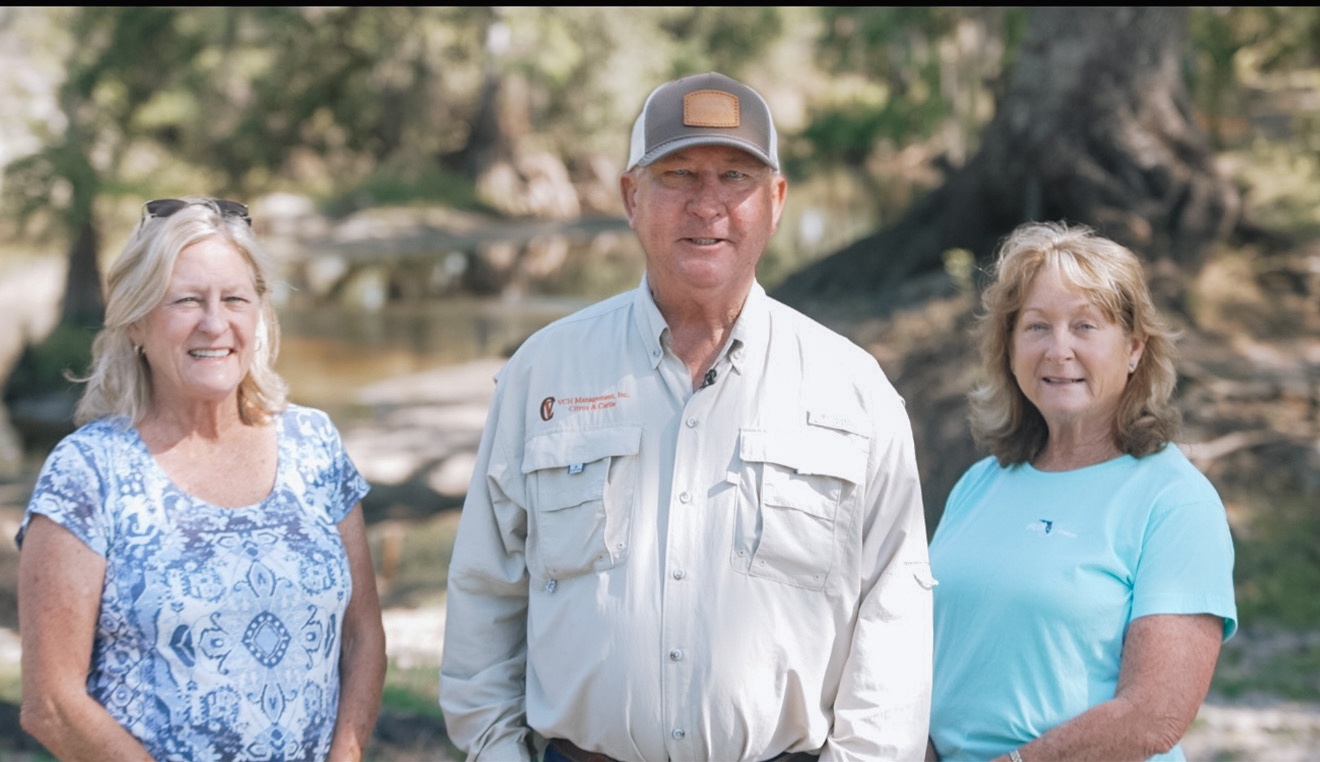 Photo courtesy of the Florida Conservation Group
The family’s agricultural history stretches back even further than Mose’s orange groves. The Hollingsworth family homesteaded in Florida in the 1860s, raising wild cattle and herding them to the cattle docks in Placida, at the northern end of Charlotte Harbor. The open range allowed the early Hollingsworths to run cattle across what is now western DeSoto County, into Manatee County and south into Charlotte County.
For the Hollingsworth family, conserving their land and protecting the waterways of the Peace River Valley is something they have long wanted to accomplish. Lou, Beth and VC hope future generations will continue to appreciate and care for this landscape, with its working ranchlands, natural waterways and abundant wildlife. The siblings also hope more ranchers and growers will have the opportunity to pursue conservation in the region.
The Hollingsworth family’s decision reflects the important role Florida’s agricultural families play in protecting the state’s natural resources. These conservation easements do far more than preserve a working agricultural operation. They permanently protect thousands of acres of open space, connected wildlife habitat, wetlands and waterways that contribute to the health of the Peace River watershed and the drinking water supplies of Southwest Florida. These are benefits that extend far beyond the property boundaries and will serve the region for generations to come.
“Beth, Lou and I work this operation and we’ve all got children and grandchildren, nieces and nephews who are coming up right behind us to take over where we leave off,” Hollingsworth said. “We all love this land and the work we do. Protecting it with these easements will give us a much better chance to keep it going.”