
Old hardwood hammocks of oak, palm and cypress give way to open pasture and river floodplain. Cattle graze beneath the trees. The river moves slowly past. This is the picturesque AM River Ranch along the Peace River in DeSoto County, where working ranchland and wild landscapes coexist.
Andrew Rohani and his wife, Monica, own AM River Ranch. Since purchasing the property, they have improved the habitat and grown their herd to about 150 head of cattle.
The Rohanis want to keep the property in agricultural use and protect it from more intensive development.
“I’ve seen all the growth happening in our area, and I’m grateful and happy that our ranch won’t be converted to more intensive development,” Rohani said. “Our goal is to keep adding more land and expanding the ranch operations so our children can continue this work.”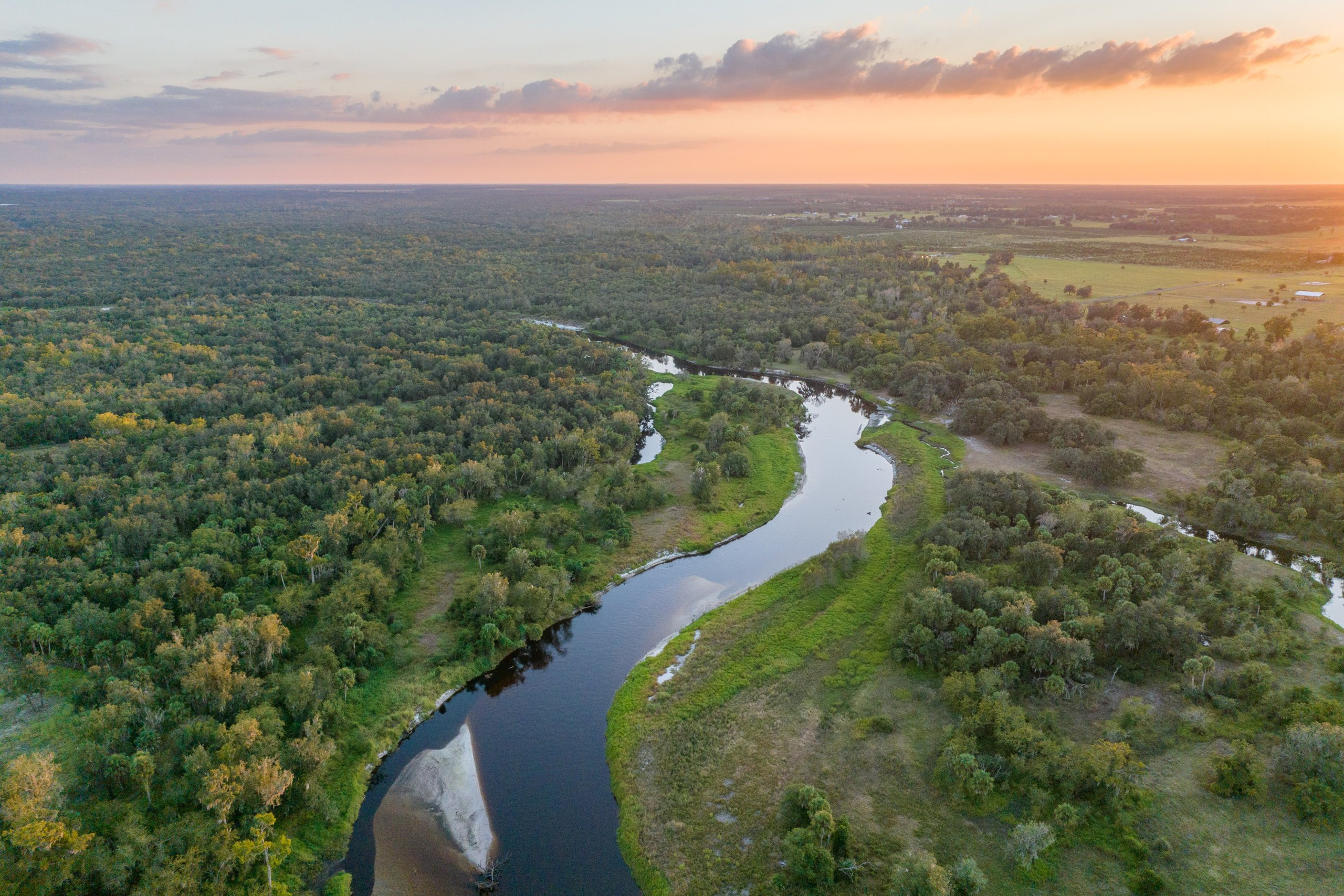
Photo credit goes to Lauren Yoho/Wildpath
The Florida Conservation Group (FCG) helped secure funding through the Florida Department of Environmental Protection’s Florida Forever program. A conservation easement closed in October 2026, allowing the land to remain in agriculture while protecting its natural resources.
AM River Ranch is part of the Peace River Refuge project under the Florida Forever Program. Its 310 acres help preserve the water quality and wildlife habitat of the Peace River and its tributaries. These waterways flow downstream to the Charlotte Harbor Estuary, an Estuary of National Significance.
The Peace River is a major source of drinking water for residents in Charlotte, DeSoto, Sarasota and Manatee counties in Southwest Florida. The ranch protects 310 acres, and its location on the river makes it an important piece of a much larger conservation landscape. Protecting these connections helps prevent fragmentation of remaining rural lands.
The Peace River Valley is part of the larger Great Florida Prairie, a vast landscape of working lands, natural grasslands, palmetto prairie, hardwood hammocks, flatwoods and wetlands. Protecting individual properties within this landscape helps maintain the larger connected system of lands and waters.
These habitats support wildlife like the Florida sandhill crane, Florida burrowing owl, gopher tortoise, wood stork, Everglade snail kite, Florida bonneted bat, southeastern American kestrel, short-tailed hawk and many others. The ranch also connects parts of the Florida Wildlife Corridor, giving species like the Florida black bear and the Florida panther more room to roam.
The benefits of conservation extend to all Floridians. Clean water, clean air and viable populations of wildlife benefit all Floridians. Wetlands filter water and recharge underground aquifers. Open spaces provide habitat for native wildlife.
Florida is losing more than 60,000 acres a year to development. As the state’s population and infrastructure grow, there is an urgent need to protect remaining rural lands before they are fragmented or lost. Both Florida Forever and the Florida Department of Agriculture and Consumer Services Rural and Family Lands Protection Program need strong funding now. Landowners are willing to sell their development rights and permanently protect their properties, but without funding, these opportunities may be lost. Time is short.
FCG staff have been working to protect this area along the Peace River since 2009; the property is part of a larger Florida Forever Project focused on protecting the Peace River. The property has changed hands numerous times, and the current landowners have a strong desire to protect it. Its protection illustrates how individual properties contribute to broader conservation efforts across the Peace River Valley and Great Florida Prairie.
AM River Ranch shows why each conservation easement matters, particularly when it helps protect a larger connected landscape. Cattle can continue to graze, the land remains in agricultural use, and its riverfront habitat and water resources are protected as part of a broader conservation effort.
“I’m grateful that we were able to preserve our ranch for future generations to come along and work this land,” said Rohani. “I sincerely hope the state will put more funding into these programs so that others have the same opportunities for their families and for this region.”
It’s conservation that keeps Florida working and wild.